History of Arches National Park... Read More
History of Arches National Park... Read More
History of Arches National Park... Read More
History of Arches National Park... Read More
Arches National Park, located in the high desert of eastern Utah, holds a distinction unmatched anywhere else on the globe: the densest concentration of natural sandstone arches. The park is home to a staggering over 2,000 documented arches, each a temporary masterpiece carved by the relentless forces of erosion, water, and time. This exceptional number solidifies the park's status as a unique geological library, providing endless examples of the arch-forming process. The sheer volume of these natural bridges ensures that every hike, drive, and viewpoint offers a new, breathtaking spectacle of gravity-defying stone.
The official tally of "over 2,000" is meticulously maintained by the National Park Service and adheres to a specific geological criterion. To qualify as an arch, the opening in the rock must have a clear space—a "light opening"—of at least three feet in any one direction. This strict measurement ensures that the count includes only significant, permanent features and excludes smaller potholes, windows, or caves that might otherwise inflate the number. The criteria reflect a commitment to documenting true natural bridges, defined as structures in which the opening is formed by weathering and erosion of an exposed rock fin. Every three-foot opening represents a victory of water and ice over the massive Entrada Sandstone.
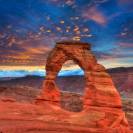
While the park boasts thousands of arches, the visitor experience often centers on a select few famous ones. The majority of tourists flock to the handful of easily accessible or globally renowned structures that have become symbols of the American West. Delicate Arch, arguably the most famous geological feature in Utah, demands a challenging hike but rewards visitors with a view of its elegant, iconic free-standing span. The colossal Landscape Arch is equally popular, known for its astonishingly thin, ribbon-like structure that measures over 300 feet across, making it one of the longest natural arches on Earth. Furthermore, the massive, close-set openings of Double Arch captivate visitors with their immense scale and complex form.
These highly trafficked, iconic arches, however, represent only a tiny fraction of the park's true inventory. The vast majority of the 2,000-plus arches are tucked away in remote canyons, along the edges of towering rock fins, or deep within the intricate labyrinths of areas like the Fiery Furnace and the Devil's Garden Primitive Trail. Many require strenuous backcountry hiking, expert navigation, or even special permits to reach. While inaccessible to most casual visitors, these secluded arches provide vital habitat and a sense of deep solitude for the intrepid explorer, maintaining the park’s wild, unspoiled character beyond the main paved road.
Ultimately, the incredible density of arches is a product of highly specific geological conditions: a vast underground layer of mobile salt that created stress fractures in the overlying sandstone, combined with the Entrada Sandstone's ideal mineral composition, which allows for selective weathering. The park’s commitment to documenting and protecting this overwhelming number of arches, from the celebrated Delicate Arch to the smallest three-foot opening, is a testament to the fact that Arches National Park is not just a collection of famous landmarks, but a globally unparalleled living laboratory of erosion and geological change.
Carved and constructed by wind and water, Arches National Park is a land of unique beauty with an interesting history that boasts abundant adventure today. ...
Read More
Arches National Park located in southeastern Utah is one of America's most unique national parks with a very distinct profile all it's own. ...
Read More